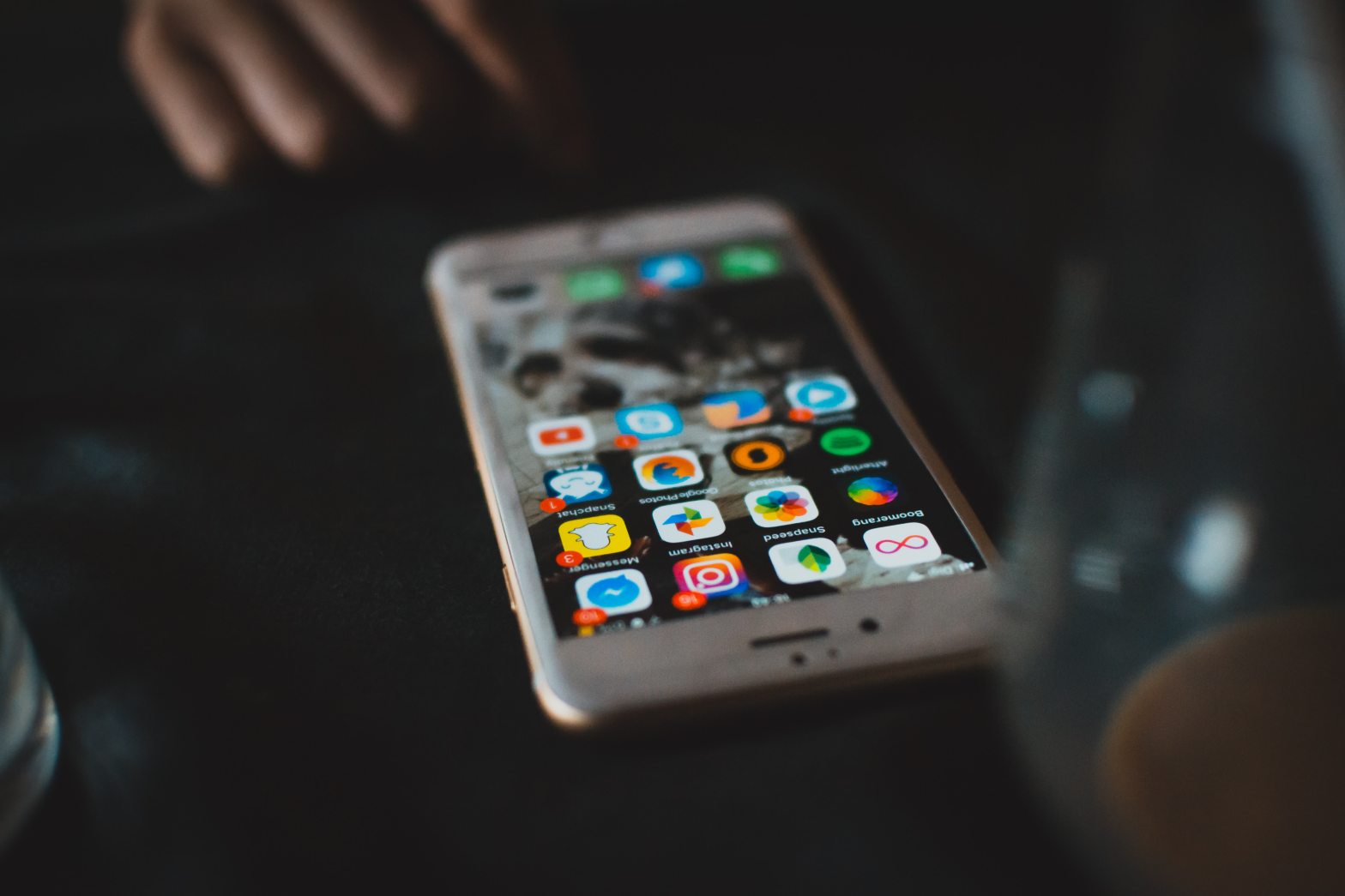
You’ve been working for the past 10 minutes. Your mind starts to wander for a few seconds. On an impulse, you check your phone. A friend has sent you a text, to which you reply. Because they’re online, you expect a reply any minute. Meanwhile, you check your Instagram. By the time you finish seeing the latest posts, your friend texts back. You reply again but this time, check your Instagram feed. Spotting memes or cat videos, you open a thread, and scroll down for a few more minutes until, with a jolt, you remember that you still have work to do. Half an hour has passed. Sound familiar? It’s because I’ve been there, too.
But it wasn’t always this way. Back in school, when I didn’t own a smartphone, I’d get bored some time after studying. But after 5 minutes of mindless daydreaming, I’d continue to study. Fast forward a couple years, another seemingly unrelated phenomenon was that of people buried in their phones while traveling in the metro. I would pass time estimating the ratio of people using their phones while traveling. With every passing year, it seemed to increase. When I began to question what changed, one trend became immediately apparent. The smarter our phones, the faster our internet, the shorter was our attention span. Because we stopped being used to simply waiting, we became impatient. Today, our brain is constantly being stimulated because it is either working or consuming media in one form or the other. It is never free to wander. But is that really reducing our productivity? Isn’t it better to be entertained than bored? The answer is easily provided by science.
The brain secretes a chemical called dopamine when it anticipates and receives a “reward”. Every time that our actions lead to a positive outcome, the link between the two is strengthened. This association is what makes us crave chocolate and an addict attracted to drugs. And now, studies have shown that dopamine is also released every time we think of the possibility of notifications or likes/comments on our posts. Algorithms utilize this psychological trait to keep us hooked on to social media. Remember the time Facebook only notified us when someone commented on our pictures? Now, they inform us when anyone in our friend list posts a “story.” So, each time we check it, there is a long list of notifications waiting for us to feel rewarded. This positively reinforces our behavior of constantly checking our phone. Experiments have shown that this reinforcement is strongest when the rewards are obtained after random intervals. This concept, which is commonly employed in slot machines to keep people playing, is also used by Instagram when you post a picture. For example, they sometimes hold out some “likes” at first and then deliver a group of them together to you.
These tactics makes us constantly need our “fix” of dopamine. And the consequence is that we develop a certain level of tolerance to it in a manner similar to tolerance towards alcohol, until the idea of working or studying (which in most cases doesn’t release dopamine), seems increasingly less appealing. This is why while working from home where you can spend time on social media to your heart’s content, you may not “feel like working.”
There’s another downside to excessive social media usage. A study found that Facebook usage negatively affected the well-being of young adults. I believe the reason for this is that people share the most picture-worthy moments of their lives on social media, which can make others feel that their life is dull in comparison. Instead of being grateful for what they have, they tend to focus on what experiences or possessions others have that they lack. There have been some studies to support this hypothesis.
So, on one hand, we get attracted to social media because it gives us instant gratification. On the other, it actually makes us feel worse about ourselves. And so, the most obvious choice for me was to quit.
While I did not delete my social media accounts, I had practically stopped using Facebook 4 years ago, only to become active on Instagram until I finally quit it about 10 months ago. Was it easy? Not at first. When I realized that it was wasting my time and inducing negative emotions in me, I decided to limit usage simply by becoming conscious of it. When that didn’t work, I concluded that I needed to make it harder to access. So, I uninstalled the app but inevitably returned after a few days. This motivated the idea of uninstalling the app during the weekdays and re-installing it for an hour during the weekend. I would involuntarily reach out for the phone and scroll down the menu, only to remember that I’d uninstalled it.
After repeating this for a couple of weeks, my urge to keep pulling out my phone reduced. Since there was no “reward” waiting for me, the link between checking my phone and receiving it had weakened. And finally, I stopped needing it altogether and haven’t felt like checking my feed ever since. It was like the time I realized I didn’t need the support wheels on my bike anymore because I’d finally learnt to balance myself. I was free.
Now, Instagram emails me every day, reminding me to check out what my connections are up to, trying to play on my FOMO (fear of missing out). But I don’t have it anymore. Their emails are in my spam folder and my peace of mind and self-control is with me. When I want to keep up with my friends, I just call or text them.
If you want to limit your social media usage too, here’s what you can do. Understand your motivation for wanting to reduce it. I hope this article gave you some insight about this. Don’t expect that you’ll be able to get rid of the habit on Day 1. The first step is just being conscious of it. Then, work towards gradually cutting it out by adding obstacles that prevent you from indulging in it. Finally, get rid of the support wheels and don’t look back.
“One can have no smaller or greater mastery than mastery of oneself.”
– Leonardo da Vinci
*Photo by Benjamin Sow on Unsplash
References:
https://guilfordjournals.com/doi/10.1521/jscp.2018.37.10.751
 Human Nature