When I was applying to universities, I intended to make research a major part of my master’s. Working on a long-term challenging project, I hoped, would help me develop a more analytical mindset, while also allowing me to contribute to the scientific community.
Fortunately, a professor told us about a potential upcoming project in our orientation week. After talking to one of his PhD students and following up the first time, I got a better idea of what it would involve. I did some homework by reading related material and set up an appointment to discuss it further. A couple months later, the project was finalized and I was offered a research assistantship.
The conclusion? A research opportunity may not be served to you on a platter before starting your MS. It’s your responsibility to talk to the professors and show your interest. A related piece of advice: avoid reaching out to professors with a generic email and your resume asking if they have assistantships/funding. It’s better to talk to them in person after finding out about their current research interests. Consider talking to their MS/PhD students to know what to expect and how to approach them.
Also, don’t look for research opportunities just to be funded. Yes, grad school can be expensive but there are other ways you can offset the cost such as through teaching assistantships, internships, and on-campus jobs. If you don’t see yourself enjoying research or find a project of your interest, it may feel like a burden. However, I would still encourage you to keep an open mind about research topics if there are no current opportunities in your immediate area of interest. If you want to work on some interesting projects but are unable to make a long-term commitment, independent research credits could be an option for you.
In the beginning, I faced a steep learning curve in improving my technical knowledge, research methodologies, as well as presentation skills. Managing 600 level classes with other responsibilities and getting used to the new environment was difficult. With time, however, I got into a routine and built some momentum. After completing the minimum number of classes for the degree (which is generally fewer for thesis students), I decided to focus completely on my research. On a related note, make sure you consult your prospective advisor(s) about which classes to take as they would know which ones will be most useful in your research.
For someone starting out with research, I hope these lessons that I learnt (the hard way) will help you avoid common mistakes.
1. Clarify your assumptions: Sometimes, unknowingly, we make assumptions based on hazy concepts or even misconceptions. Before beginning any new task, think carefully about your underlying assumptions. Next, consider the assumptions you need to make to proceed, for instance, idealities, linearity of models, etc. Anything that is not based on pure fact or a clearly stated assumption needs to be discarded from your model.
2. Start with a simple example: Anything that doesn’t work on a simple example is not going to work on a complicated one. So, always test your approach on a very basic model first and then build on it.
3. Means matter more than ends: It is more important to do it right than to get it done. Make sure you check your work multiple times. More than once, I’ve implemented something only to later find a mistake in it. But that made me understand that jumping from one step to the next without carefully analyzing it will not only yield wrong results but will also waste time. One trick to check your work is to put yourself in the position of listener to whom you’d explain your results. Is the reasoning clear enough? Are there aberrations that they would observe? Before being satisfied with seemingly good results, probe them for subtleties because they can either hide mistakes or highlight interesting concepts that can lead to a deeper understanding.
4. Be flexible with your approach: It’s hard to give up on an idea you’ve worked on for weeks or even months. But you need to be open-minded towards new methods, especially if they have a shot at fixing the problems you have. A key to do this without feeling overly disappointed is to remember that research is all about investigation. Like Edison said, “I have not failed. I’ve just found 10,000 ways that won’t work.”
5. A (good) picture is worth a thousand words: Research can be useless unless it is effectively communicated with the professionals for whom it is intended. So, put in effort to explain your work in a simple manner, for instance by using a picture. A clear, professional diagram or plot can go a long way in engaging the audience. Also, distilling your work into the simplest possible graphic is a great mental exercise.
Some quick tips based on what worked well for me:
- Back up all your important files.
- Communicate regularly with your advisor.
- If you’re struggling with a research problem, don’t hesitate to ask other students for advice if it is related to a field with which they’re familiar.
- Keep your phone away while working; a distracted mind makes more mistakes.
- Avoid coffee and unhealthy snacks except to meet an occasional deadline otherwise your energy levels and overall health will get affected.
Research is a journey. You will take detours, reach dead ends, visit new places, get tired, and even have your vehicle break down. So make sure you stop to refuel/recharge once in a while. I hope it takes you where you want to go and that you enjoy the ride.
“By seeking and blundering, we learn.”
– Johann Wolfgang von Goethe
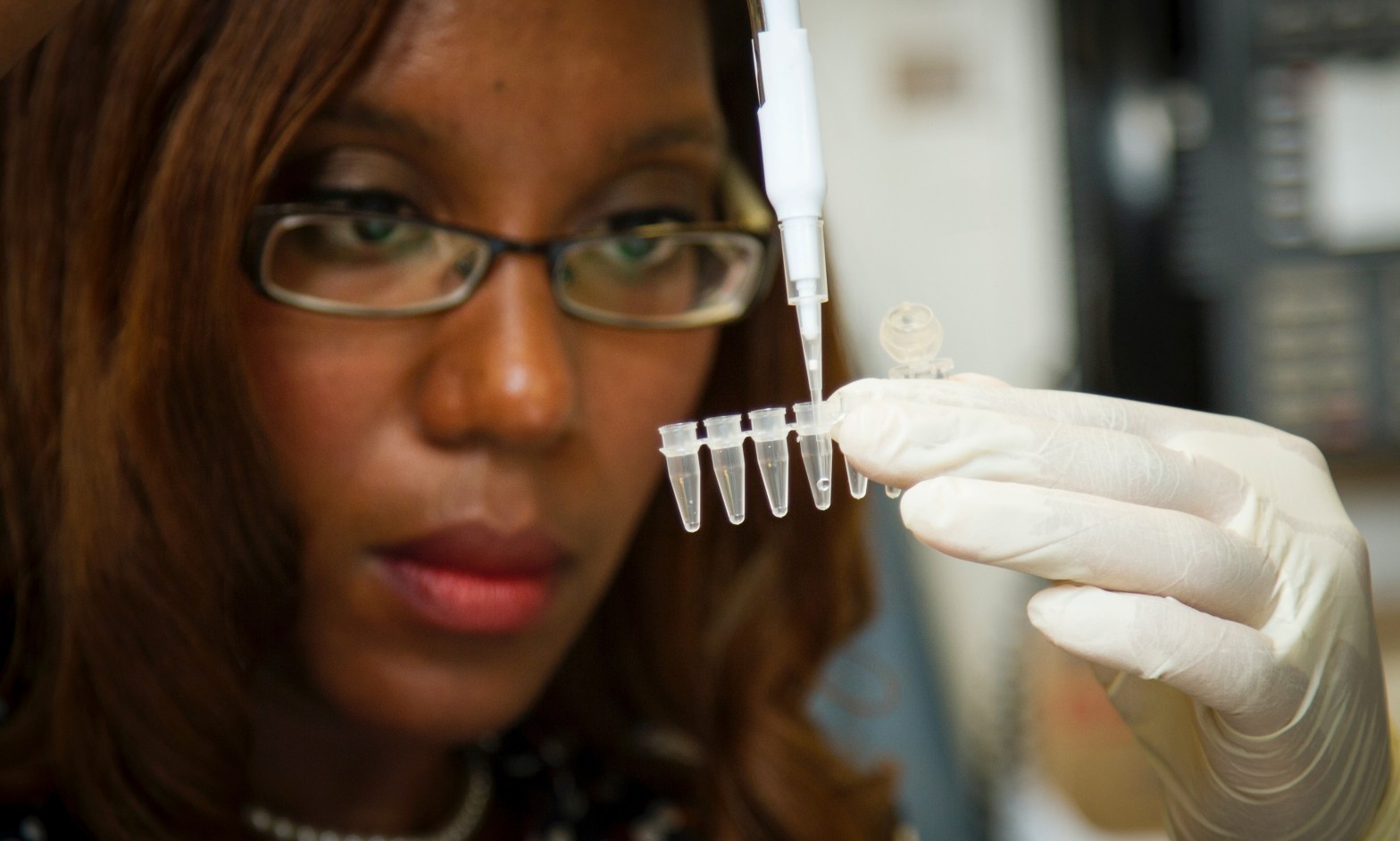
* Photo by National Cancer Institute on Unsplash
 Human Nature