There’s a simple way to destroy our oceans and we’ve already made great progress. Let me show you how you can also contribute to this incredible global phenomenon.
Step 1: To make sustainable, long-lasting changes, we start by making gradual shifts in our lifestyle. Like if you wanted to get fitter, you’d start by setting exercise goals, celebrating small wins, and making an identity shift, e.g. of an athlete. In this case, we call these shifts ‘progress’ and ‘convenience’.
Think about going to the supermarket. Go for the healthier option. If you see bulk tomatoes versus cherry tomatoes in a cute plastic package, choose the cute plastic package. If something doesn’t have a package, we put it in plastic first, then we gather a couple of such items and put it in another plastic bag.
Sounds simple enough? If not, think about the impact you can make for some motivation.
Eventually you throw out all the packaging. Then, if it doesn’t go to a landfill instead, it will end up in the ocean. At least 10 million tons of plastic waste ends up in our oceans, the equivalent of a truck load of trash every minute. And the result? Almost 60% sea bird species have plastic in their gut, but we are aiming even higher. At this rate, we can get to 99% by 2050!
Because habits compound over time. So, make it a part of your lifestyle. So will others. And eventually, we will reach the goal of having more plastic than fish in the ocean! How soon? Oh, less than 30 years, don’t worry.
Step 2: Party on the beaches! Well, this one is the most fun. All you have to do is throw trash wherever you can along the coastline. The whales that come close to the shore should be so mesmerized with the sight and so full (with stuff they ate from step 1) that they will want to take a nap on the beach. In fact, they will never want to go back!
Step 3: Just like exercising goes hand-in-hand with nutrition, so does destroying 70% of the planet. So eat fish. Get your omega-3s. What? Fish actually get theirs from algae? Ah well, algae can’t be fried or grilled and spiced up. Besides, we also need to get the other essential nutrient — the toxins the fish have consumed because of water pollution. Now, I know what you’re thinking. Why can’t I just eat walnuts or flaxseeds or chia seeds for omega-3 fatty acids? I mean you definitely can but that won’t help you get closer to your goal! Read the title!
You need more motivation? Well, the idea is to initiate a grassroots movement. That’s how real change occurs. We eat the small fish like tuna and salmon. Fishing them has long since become the forte of big corporations that use commercial trawlers — massive killing machines to capture all kinds of animals. 40% of fish caught are bycatch including 300,000 whales, dolphins and porpoises and 50 million sharks every year! That, along with demand for other shark products, ensures that 11,000-30,000 sharks are killed every hour! But sorry, sharks. Should’ve tried to be nicer and not shown off those scary teeth. There can be only one bully on the playground (play-sea?) and that’s us. Dolphins are also hunted and killed to remove them as a threat to small fish populations. And corporations lobby to keep your seafood cheap through heavy subsidies. So, yes, unless for some strange reason you decide to stop eating fish, the demand will stay high.
A bonus effect is also speeding up climate change. How? Whales stimulate the growth of phytoplankton and themselves provide excellent carbon sinks through their bodies. And this phytoplankton is responsible for 85% of the oxygen on the planet! Do you see what happens with endangering whales?
And remember the viral picture of the sea turtle with the plastic straws up its nose that shocked us and gave us the warm, fuzzy feeling switching to reusable straws? 500 times as many sea turtles are captured, injured or killed every year because of fishing.
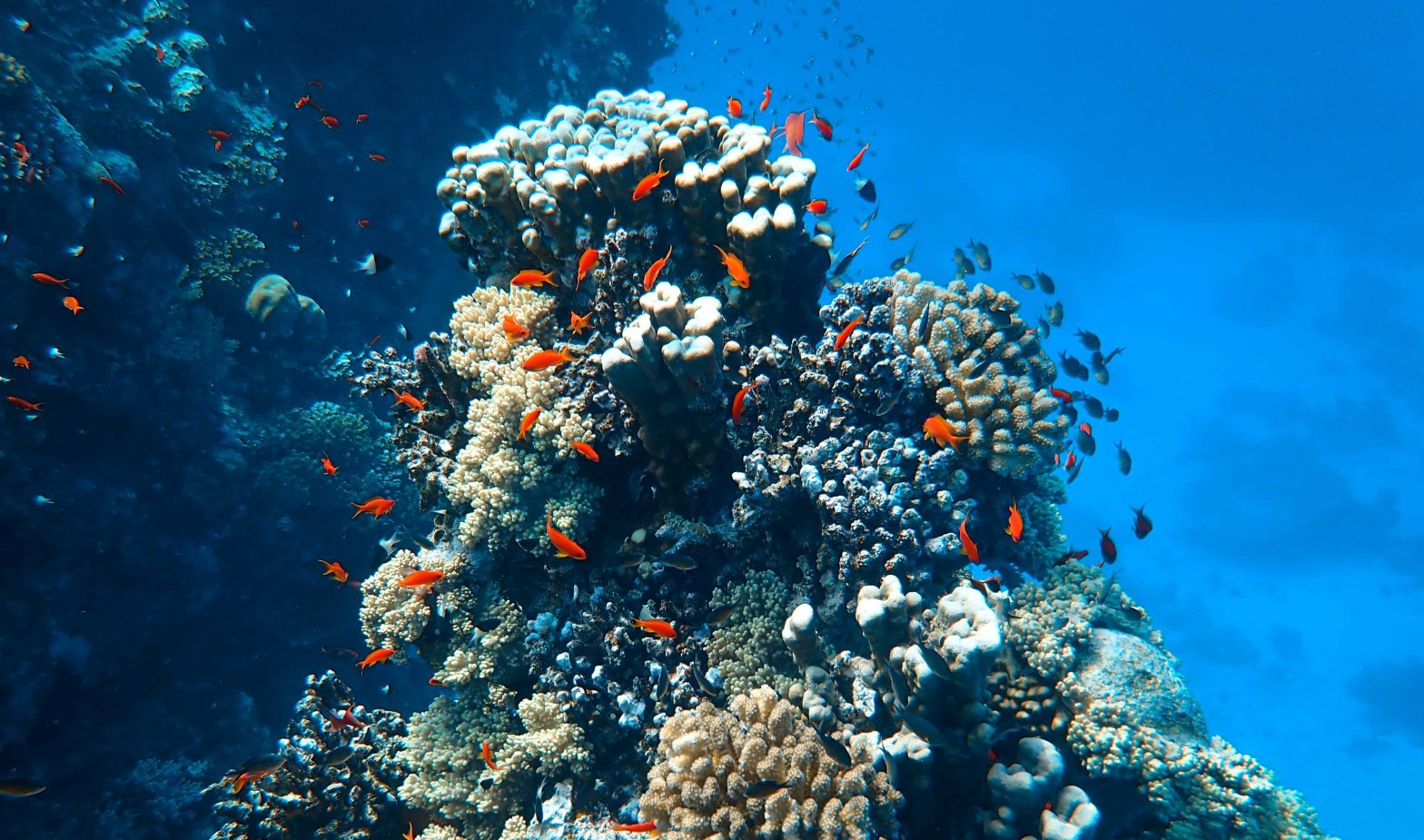
To top it all, most of the fishing gear, gigantic nets, are discarded which destroys the seabed and the coral reefs, which support up to 25% fish species, with them. In fact, 46% of the Great Pacific Garbage Patch is fishing gear. The volume of fishing gear lost at sea is equivalent to 50,000 double decker buses every year–out of sight, out of mind, and trapping and killing animals.
See? You never know how big of a role you can play without even realizing it. As they say, “give a man a fish and he will eat for a day. Teach a man to fish and he will empty the oceans of all fish by 2050.”
Okay, okay. You get the idea. Honestly, I had no idea how bad things were either until I started researching for what I thought would be a simple article. But if you see the problem and actually want to help, here are 3 real ways you can save the ocean. Just do the opposite of everything I said earlier.
- Reduce trash: Let’s look at our lifestyle and start making changes. Can you start carrying re-usable water bottles and re-usable cups for your coffee? Can you buy from the wholesale food section rather than the pre-packaged one? If some packaging is unavoidable, can you at least recycle it later? I have witnessed the power of consumer demand in other markets. Basic economics – supply will show up when there’s demand. In the 1990s, there was a demand for cheap, disposable packaging, so plastics entered the field. If we demand reusable and biodegradable items, so will they.
- Support ocean-conservation causes: There is a crowdfunding campaign running until the end of 2021 with an ambitious goal of cleaning up 30 million pounds of trash including discarded fishing gear from the Great Pacific Garbage Patch, and plastics from beaches and polluting rivers all around the world. The objective is to remove 1 pound of trash for every dollar donated. How about setting aside a little money to donate to them this holiday season? Every dollar counts! Make a positive impact in the final week of the year. You can donate here at https://teamseas.org/. If you stay close to a water body, can you volunteer to spend some time cleaning up the beaches? Join a local organization and make some friends while also contributing to the cleanliness of the community.
- Reduce/eliminate consumption of seafood: This is the biggest one. If demand reduces, so will supply from large scale commercial fishing and the resulting devastation. Instead, demand plant-based seafood. There are many new brands offering a variety of plant-based seafood options that taste like the real thing minus all the consequences mentioned earlier.
What can’t humans do if we put our minds to it? I believe in human compassion, creativity, and willpower. And I believe we can protect our oceans and its innocent inhabitants from further destruction. If we choose to act now.
References:
- A pregnant whale died with almost 50 pounds of plastic in her stomach (nationalgeographic.com)
- Dead Whale, 220 Pounds of Debris Inside, Is a ‘Grim Reminder’ of Ocean Trash – The New York Times (nytimes.com)
- https://www.independent.co.uk/voices/fish-plastic-straw-ban-marine-life-ocean-environment-francis-perez-a8518351.html
- 414 million pieces of plastic found on remote Australian islands: Study – CNN
- Great Barrier Reef dying: Climate change has caused 89% decrease in new coral in Great Barrier Reef and threatens recovery, study says – CBS News
- Why the Great Barrier Reef Could Disappear by 2050 (businessinsider.com)
- https://www.seaspiracy.org/facts
Photo by Francesco Ungaro on Unsplash
 Human Nature