
The air was thick with anticipation. People scanned the blue surface for the next glimpse. And then, gasps, as two sleek black bodies emerged.
I was aboard a whale-watching tour boat. The two killer whales (or orcas) we’d spotted were brothers, named Onca and Lynx, aged 18 and 14 years, respectively.
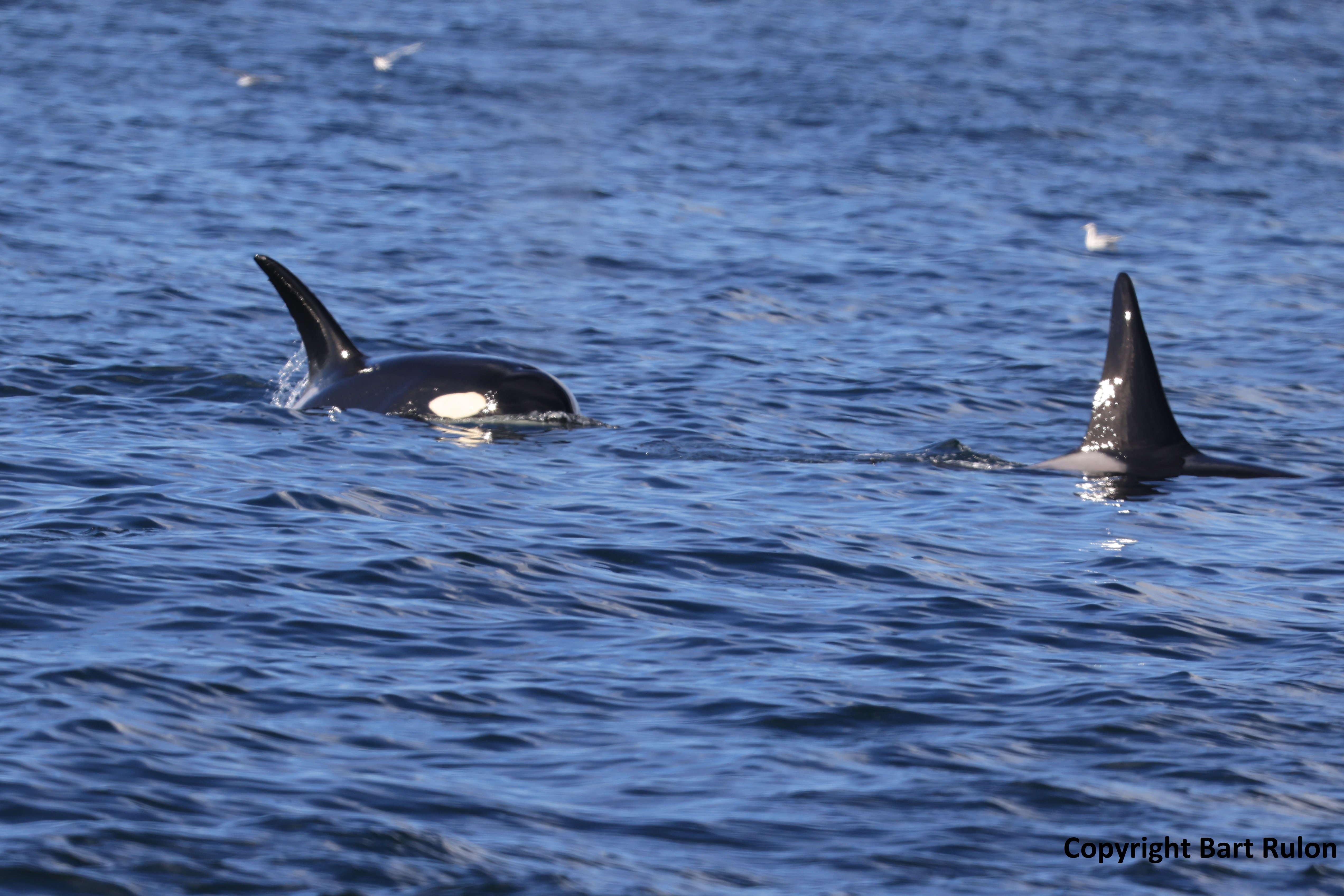
I wondered how they could be identified by names and how their age and relationship were known. Didn’t all killer whales look similar and spend most of their time underwater? Turned out that much like the orcas, I’d just skimmed the surface of the dramatic turn of events that led us to know orcas as individuals.
Described to be merciless in limited historical accounts, humans had mercilessly killed the killer whales. In 50 CE, Romans had brutally stabbed an orca all over its body as a public show when it got stuck in shallow water. Fast forward to 1931, a little orca had wandered up the Columbia River in northern Portland. A debate ensued about whether it should be put up in an amusement park or blown up with a dynamite! An ex-whaler abruptly ended the debate by lancing it to death and putting her carcass up for public display.
Unfortunately, these killings were not isolated events. In the late 1800s, the “sealing” industry, which is the killing of seals for their fur, was thriving in the Pacific Northwest. Since killer whales preyed on seals, they were viewed as a nuisance. Soon, however, the fishing industry drove commerce in the region and then seals, in turn, were regarded as pests because they consumed fish. Canada and US then started eliminating sea lions and seal populations! Conveniently, we labeled members of nature’s food chain as pests based on which of their food we wanted to take.
Fishermen routinely shot and killed orcas. The whaling industry, bounties on their prey, and construction of dams that blocked the path of salmon (the primary food source for resident killer whales) further contributed to the decline of their populations.
In the 1950s, the Icelandic government considered orcas as threats to their fishing industry and requested US soldiers to eliminate them, the result of which was the assault and deaths of hundreds of orcas with machine guns. Meanwhile, Japanese and Soviet vessels continued to mass-slaughter orcas. The story that haunts me the most is the death of a young orca that got entangled in a net and drowned. While its mother searched for her calf nearby, kids posed for pictures with the calf’s dead body…
However, a new idea soon took shape. Aquarium owners thought of displaying killer whales live. What an attraction it would be to showcase these dangerous, mighty predators! Several young orcas were captured (cruelly) but because of the lack of knowledge about their lifestyle and intelligence, these long-living social mammals died very quickly in captivity.
Among those keen on capturing a live orca was a young Seattle-based entrepreneur, Ted Griffin, who had harbored the ambition of learning more about these fearsome creatures. So, when he got a call from two fishermen who unintentionally struck gold by capturing an orca in their cast-away net, Ted gathered up the money they demanded and headed there. He towed the animal live in a cage through the water with his boat. This orca was named, ‘Namu’, a name that would be carved in history books and the hearts of Pacific-Northwesterners.
Hundreds of thousands of visitors flocked to see the orca residing in a closed-off section on the Seattle waterfront and therein began a major shift in perception because the 23-foot-long orca, who could easily have killed Ted turned out to be gentle and docile! Tons of merchandise were sold as the ‘Namu’ craze took over the world.
When Hollywood expressed interest in filming Namu, Ted demonstrated how safe it was by getting into the water and swimming with him. Soon, he started training Namu and even riding his back! Once Namu would have been regarded as a bloodthirsty beast. But now, people found him endearing and the bond between the Namu and Ted to be heartwarming.
Alas, one day, Ted got the dreaded call; Namu was dying. The pollution in the Seattle shoreline had affected his health and Namu passed away. Ted was overcome with grief and guilt and never bonded with any orca in his aquarium in the same way again. Instead, he decided to capitalize on his knowledge and experience in orca-capture. Putting together a team, he caught and sold several orcas to commercial enterprises that were clamoring to display them.
Capturing them wasn’t easy, though. And when he did manage to locate some, they escaped by employing a number of tricks including sending out a couple of their pod members as decoys — a sign of their strategic intelligence and teamwork.
Griffin wasn’t the only one who tried. A few other fishermen also eyed the now-lucrative business. However, after several captures, some publicly viewed, the increasing familiarity with the gentle animals, their deaths, mishandling, and separation of orca children from their families, the public sentiment towards the live-capture industry shifted. Once hailed as fearless heroes, the captors were shunned by animal rights activists and neighbours jealous of their profits. Increasing negative opinions and their own pricking conscience made some give up their business.
For his part, Ted released most orcas of each pod that he caught, keeping only a couple at a time, despite the mounting demand. The cries of the close-knit orca families as their kids were taken away wrenched his heart along with the concern that their population could be dented to an unsustainable level.
If a human child was kidnapped, then sold for a profit and imprisoned to generate money for someone else, it would be one of the worst crimes ever: human trafficking. That it was okay to do the same to these mammals shows the double standards animals have always faced.
Artificial enclosures could not offer the space that orcas need. They were kept isolated or in artificial social groups where they could not escape conflict with other orcas which hurt their emotional and physical well-being.
Several Northwesterners turned against the business. They pressured government officials to take action against the trade. And it worked! Bills were passed that restricted orca capture to certain areas and limited the number of animals that could be taken. Ted perceived these measures as government interference. In fact, his own showcase of orcas like Namu was the main reason that people who formerly didn’t think twice before shooting them, now fell in love with them and wanted to protect them. He quit his business and left it to his partner, Don Goldsberry.
Goldsberry continued the business amid increasingly negative sentiments. His company got acquired by SeaWorld. But the restrictions made it difficult to capture orcas in the Pacific Northwest. So, SeaWorld turned to Iceland, where public view of the orcas was similar to the earlier view in the US. Here again, deaths of a few captive orcas led to international criticism and soon Iceland also imposed restrictions on the industry.
Ironically, it was this industry itself that had made people aware about the nature and intelligence of these animals, enabled research on their behavior through close interaction and tracking their movements, and led to conservation efforts. The research conducted by Dr. Michael Bigg led to the identification system that enabled the identification of the two orca teenage brothers we saw.
If it wasn’t for the few orcas that had been exhibited, people would continue to thoughtlessly kill them and would have driven them to extinction. We can imagine the pain the orcas would have felt when they were separated from their families, shipped off to stay in a confined space and live in relative isolation and boredom until they succumbed to injuries and diseases. They became the sacrificial black-and-white pieces in the game of chess. The battle was won so the massacre could be stopped.
Seeing the orcas, knowing them as individuals, learning about their intelligence through research and interaction, forced us to change.
But I wonder…how many lives could have been saved if we operated with care and love in the first place, instead of defaulting to fear, greed, and cruelty?
References:
For a detailed account of the history, read Orca: How We Came to Know and Love the Ocean’s Greatest Predator by Jason Colby, which is the main reference for the facts presented here.
Orca: Shared Waters, Shared Home – Lynda Mapes
https://www.nationalgeographic.com/animals/mammals/facts/orca/
https://www.pnas.org/doi/10.1073/pnas.1709475114
https://cdnsciencepub.com/doi/abs/10.1139/z00-155#.XJaibURKjOR
Cover photo by Thomas Lipke on Unsplash
 Human Nature