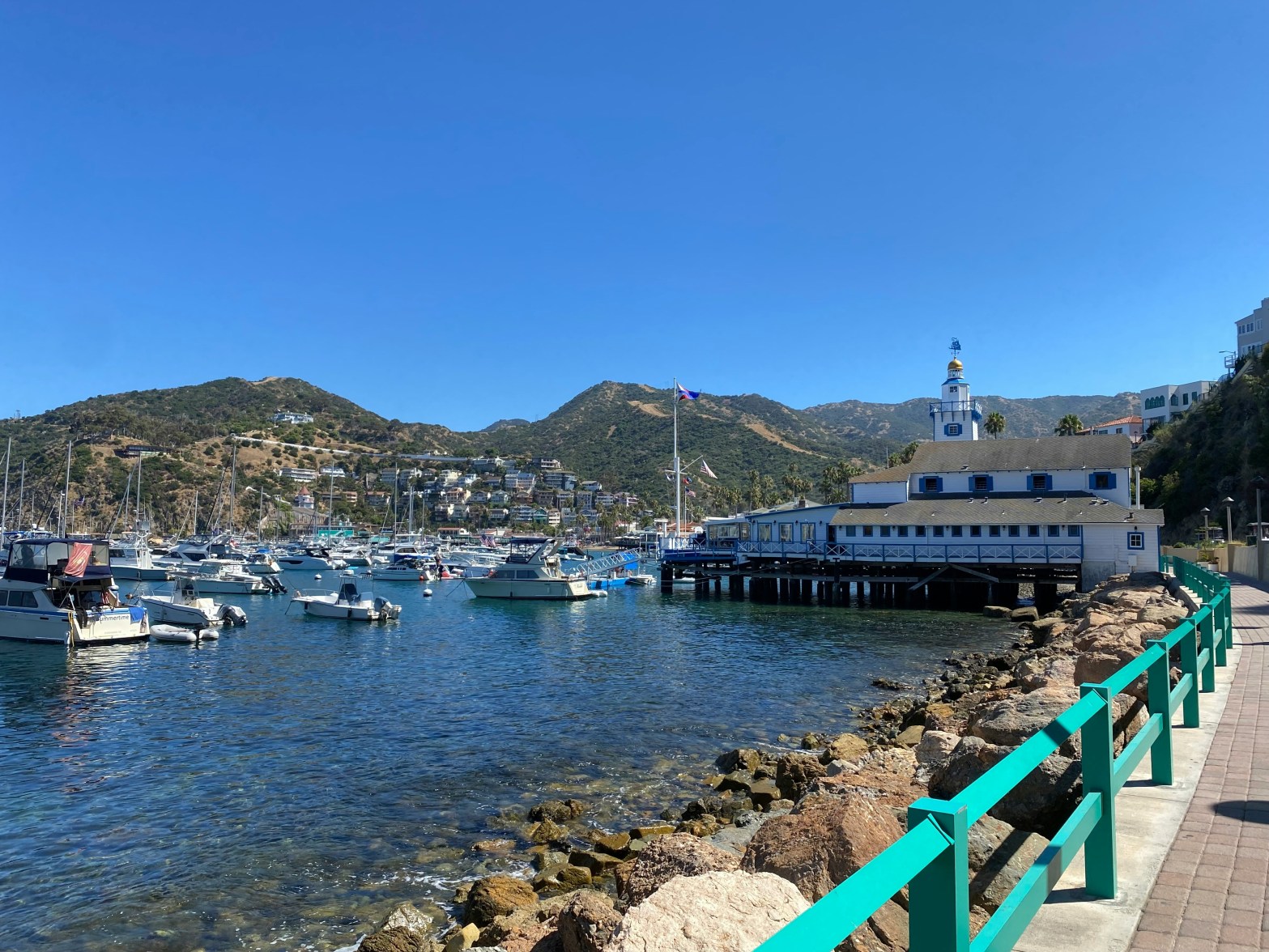
The silhouette of Catalina Island finally emerged on the horizon. For the past hour, the ferry had made its silent progress over the unchanging blue waters of the Pacific. Situated off the Californian coast near Los Angeles, Catalina Island is not just a scenic spot but also a beacon of marine conservation with an impressive array of nine marine protected areas (MPAs) along its coastal and offshore regions. MPAs like these are designated by governments to protect marine ecosystems from threats like overfishing and petroleum drilling.
Creating MPAs also contributes to the well-being of local communities. For example, protecting mangrove forests and coral reefs lining coastlines not only fosters healthy habitats for marine life but also fortifies the shoreline against erosion. A compelling case in point is the resilience displayed by mangrove fringes that protected coastal human communities during the 2004 Indian Ocean tsunami.
Approaching the shores of Avalon, a town on Catalina Island, I couldn’t help but notice a scattering of bright orange objects in the water but dismissed them to be neon indicators of some sort. When I disembarked, however, I realized they were actually Garibaldi, the state marine fish of California frolicking in the shallow crystal-clear water presumably without fear, since fishing them is illegal in most parts of the island. This species had once been exploited by the aquarium trade and sport anglers. They were initially protected, in part, because they were easy for tourists to spot on glass-bottom boat tours at Catalina Island, an example of how eco-tourism is interconnected with conservation. California now has laws in place to prohibit capturing Garibaldi without a permit.
Seeing them out there in the open, without having to search, filled me with hope. Growing up, I was fascinated with the diversity and beauty of aquatic animals from reading picture books and watching National Geographic and Discovery channel. I would glue myself to aquarium fish tanks (though I do not support the practice now — read why in this article). And now I would get to see them in their own home, I thought, making my way to the Casino Point Marine Dive Park, a 20-minute walk away. With its colorful shops and paved walkways, Avalon is place straight out of a Disney movie. I wanted to explore it more, but it would have to wait. Today, I was here to dive.
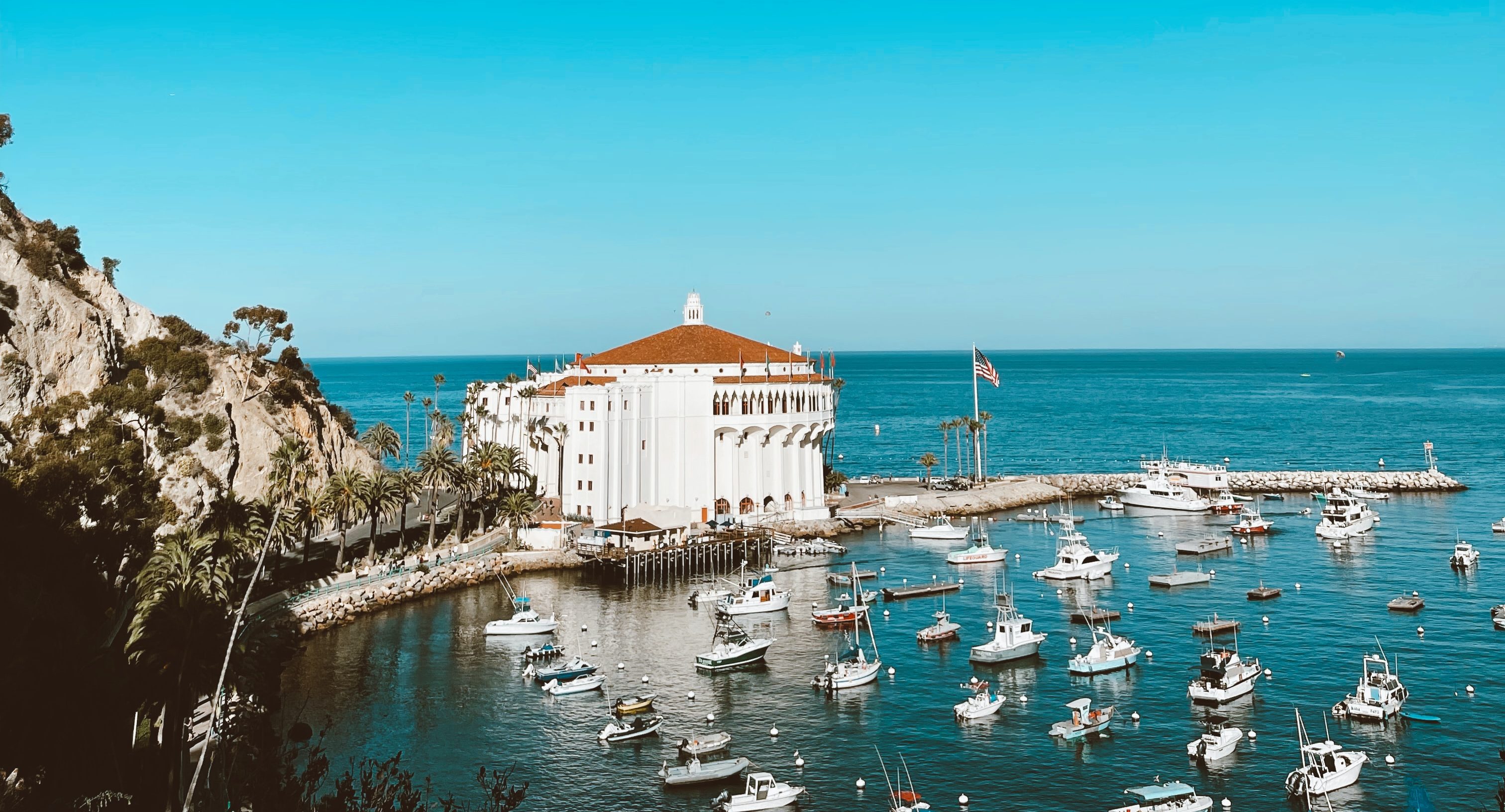
In the 1960s, the waters surrounding Casino Point became one of the first underwater parks in the country. Scuba divers, snorkelers, boaters, and wildlife enthusiasts visit the MPA to enjoy the clear water and abundant marine life, free of heavy waves and surf. Situated on the warm, southeastern side of Catalina Island in Avalon Bay, this MPA is home to kelp bass, halfmoon, California sheephead, garibaldi, señorita, moray eels, horn sharks, marine mammals and invertebrates. California spiny lobster, abalone, crabs, and nudibranchs (sea slugs) can also be found on the sandy seafloor and in rocky crevices. The suite of marine life found off Santa Catalina Island makes it one of the most biodiverse environments in Southern California.
I hurried to the dive tour operator’s truck and quickly donned my scuba gear, buzzing with anticipation. “The conditions couldn’t be better,” said the dive tour guide, going on to provide instructions. But I was still bit nervous. This would be my first recreational dive after getting certified by PADI as an open-water scuba diver.
On my very first peep into the water, I could see a few different fish swimming 10 feet below me. I descended slowly, my mind fully alert in this foreign environment. Being literally an immersive experience, mindfulness is the default state while scuba diving; it’s impossible for your mind to wander off anywhere else.
The guide pointed out a grey colored moray eel peeping out from under its hideout in the rocks on the seabed, watching us swimming above him with its little black eyes. Going further, I saw different fish that were just as unafraid of us. It was also surreal how comfortable moving and breathing underwater from the air tank regulator felt. It was almost as if we were a part of their home.
And what a beautiful home it was! Hundreds of kelp plants undulating hypnotically, each 70-foot-tall plant, with fish flitting among them. Swimming between a pair of them, I marveled at how the towering kelp plants were lit yellow-brown close to the surface to and shaded blue-green near the seabed where lesser sunlight reached.
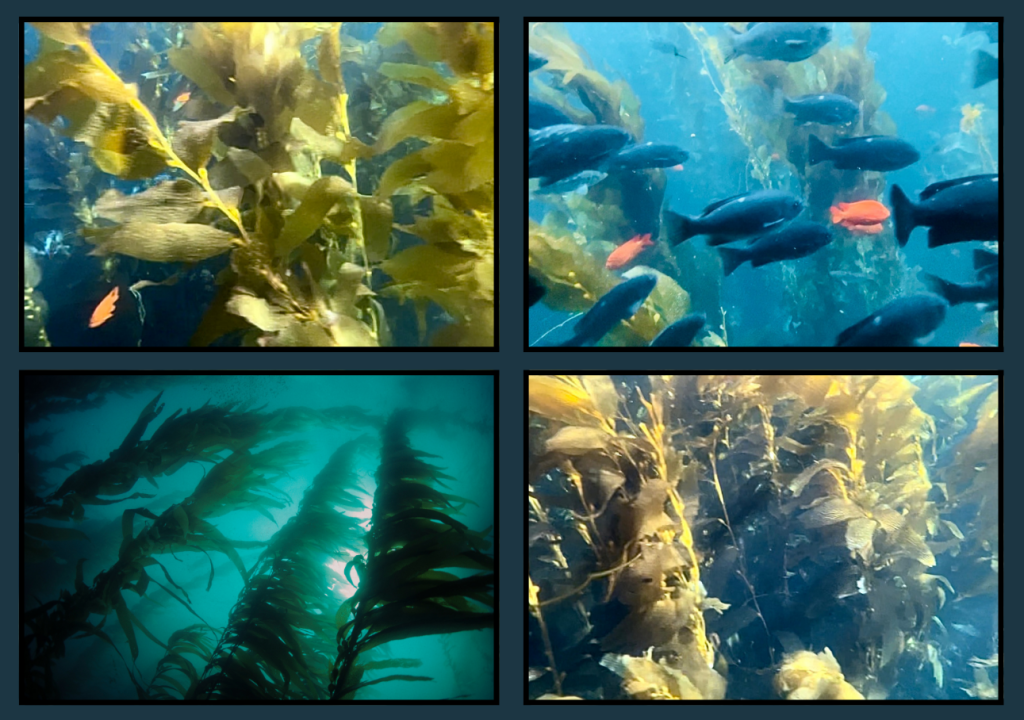
Numerous hiding spots in the kelp forests provide safe nurseries for young fish such as kelp bass and rockfish. Cormorants dive to feed on these juvenile fishes and gather kelp for their nests. At the surface, kelp spreads out horizontally in a massive tangle. Sea otters like to nap here, wrapping themselves in kelp like a blanket, so they won’t drift away.
Beside nurturing marine life, kelp forests protect coastlines from erosion by buffering waves. They also help fight climate change and ocean acidification by storing a lot of carbon. The oxygen produced by kelp photosynthesis may even make its way into the air we breathe!
In fact, oceans globally play a critical role by sequestering 93% of carbon, with coastal ecosystems like kelp forests and seagrass storing up to 20 times the carbon per acre as terrestrial forests! From phytoplankton (which supplies 85% of the world’s oxygen) to whales, marine life is crucial for the health of our planet. Preserving these ecosystems is not just an environmental necessity but also an act of self-preservation.
However, climate change is testing the resilience of such marine ecosystems. Warming seawater and diseases contributed to a staggering 90% decline in bull kelp along California’s Sonoma and Mendocino County coasts between 2014 and 2016. Human activities have further presented several challenges to ocean habitats, including pollution, sedimentation from urban development, and the introduction of non-native invasive species. In various kelp forests, heavy commercial fishing practices have reduced populations of lobster and sheephead that are predators of kelp-eating herbivores like urchin, and the resulting increased populations of urchins have devoured entire kelp beds.
Globally, industrialized fishing has inflicted severe damage on marine ecosystems. Large-scale trawlers, driven by the insatiable global demand for seafood and heavy subsidies, have disrupted entire food chains, leaving the natural predators of these fish hungry or dead. In doing so, they have also destroyed the livelihoods of local fishers and communities. Less than 3% of the world’s oceans and just 1% of the high seas (waters beyond national jurisdiction) are protected from such destructive fishing practices. Recognizing the dire situation, countries agreed to the High Seas Treaty last year to help expand protected areas to 30% by 2030.
Marine Protected Areas like in Catalina Island are a testament to their environmental and economic benefits. They not only boost local economies by providing a plethora of tourist activities but also encourage responsible fishing practices. For instance, the ban on fishing for giant sea bass since the 1980s has led to their gradual resurgence around Santa Catalina Island.
The path forward is clear. Individually, we must reduce our demand for fish and fish products, recognizing that as human populations have exponentially surged, marine life has become endangered. Let’s also take a minute to sign petitions like these to stop the extremely destructive deep sea mining industry.
Regulating fishing practices and establishing more MPAs are essential steps to protect and preserve the remaining marine biodiversity. Mission Blue, an alliance advocating for marine protection, promotes the concept of “Hope Spots” — areas with unique biodiversity, historical significance, or economic importance. The call is for a worldwide network of MPAs to ensure the conservation of these vital marine ecosystems. Because nature is resilient and given the chance, can thrive once again.
References:
https://education.nationalgeographic.org/resource/marine-protected-area/
https://weather.com/en-IN/india/biodiversity/news/2021-11-05-how-mangrove-forests-became-the-unsung-heroes-of-the-2004
https://wildlife.ca.gov/Conservation/Marine/MPAs/Casino-Point
https://www.nps.gov/chis/learn/nature/garibaldi.htm
https://marinespecies.wildlife.ca.gov/garibaldi/false/
https://mpatlas.org/
https://sitn.hms.harvard.edu/flash/2019/how-kelp-naturally-combats-global-climate-change/
https://www.bbc.com/news/science-environment-64815782
Exhibit at the Milstein Family Hall of Ocean Life in the American Museum of Natural History
Recommended documentaries/docuseries:
Our Great National Parks - Monterey Bay National Marine Sanctuary, USA (Netflix)
Mission Blue (Netflix)
Seaspiracy (Netflix)
 Human Nature
Very informative and educative article. Convert this into an animated presentation so that these contents reach larger audiences.
LikeLiked by 1 person